Lesson 2
Ragebait
- You ever clicked a headline and immediately felt angry, anxious, or fired up?
- That's not an accident. Some content is written to manipulate your emotions.
- It's called clickbait or "ragebait", and it works by triggering a quick reaction. In these cases you don't slow down and think critically. That's what a lot of people want. More anger → more engagement → more $$$ in their pockets.
- Keep an eye out for intentionally inflammatory language, biased phrasing, or omission of details.
- In this lesson, we'll explore the difference between emotionally charged content and balanced, trustworthy sources. You'll learn to spot the tactics: extreme wording, missing context, or outrageous claims.
Headline Matchup
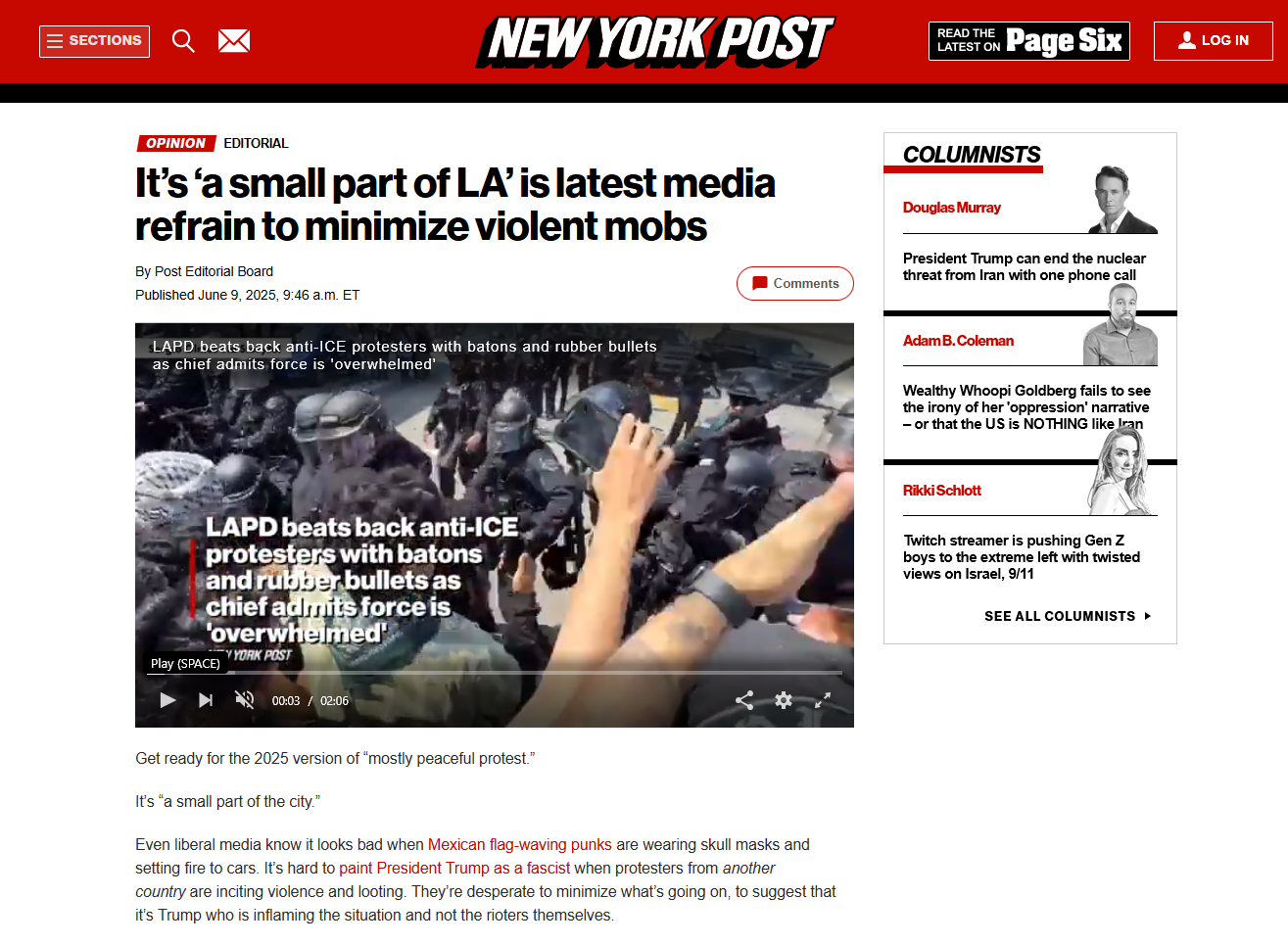
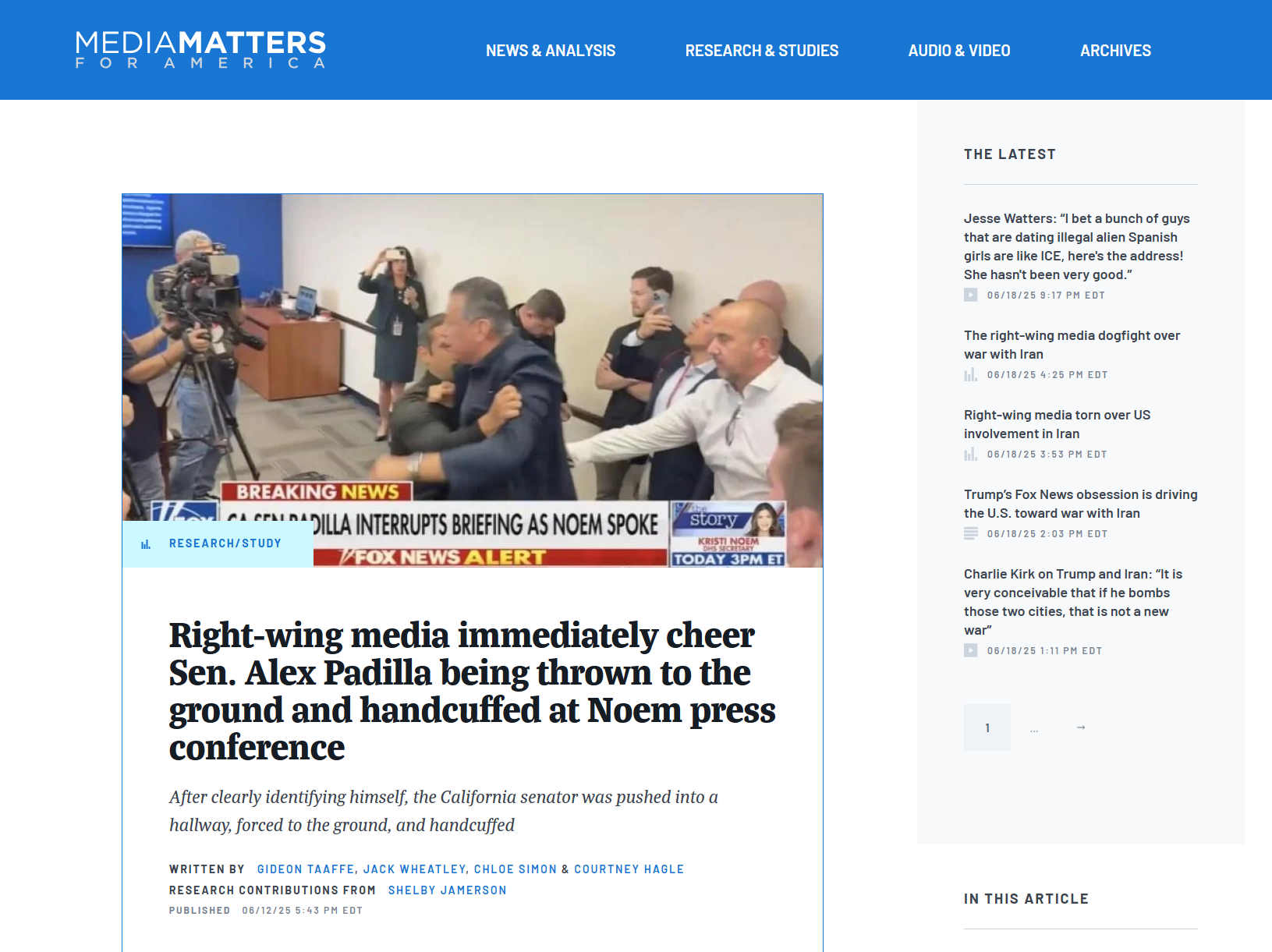
Here is coverage of the LA protests from NYP (a right leaning source) and coverage of Senator Alex Padilla being forcefully removed from a DHS press conference. How might these be used to incite a reaction?
Possible Answer & Explanation:
The Media Matters headline uses jarring words like "thrown" and puts the upsetting video front and center. The NYPost article uses biased in-language to demonize progressives and trivialize the 2025 LA ICE protests.
These are good examples of how small linguistic choices can be used to sway your emotions. Take note of how you feel after reading both. While you might not be flipping tables, digesting content like this consistently can alter your political views significantly.
The Media Matters headline uses jarring words like "thrown" and puts the upsetting video front and center. The NYPost article uses biased in-language to demonize progressives and trivialize the 2025 LA ICE protests.
These are good examples of how small linguistic choices can be used to sway your emotions. Take note of how you feel after reading both. While you might not be flipping tables, digesting content like this consistently can alter your political views significantly.